Best ATM Skimmer Awareness Guide: How Detection Software and Security Tools Protect Your Money
The phrase “best ATM skimmer” often surfaces in underground forums, dark web listings, and fraud investigations, where criminals evaluate devices based on criteria like undetectability, data capture reliability, remote access, battery life, and low installation risk. From a security and educational standpoint, understanding these “top-tier” tools is crucial for awareness, prevention, and defense not endorsement. ATM skimming remains a major threat despite widespread EMV chip adoption, with the U.S. Secret Service reporting the removal of 411 illegal skimming devices in 2025 alone, preventing over $428 million in potential fraud losses through nationwide inspections of nearly 60,000 terminals.
These devices exploit vulnerabilities in magnetic stripe fallback, chip shimming, or contactless interception. Advanced models minimize physical returns to compromised machines, using wireless transmission to relay stolen card data and PINs. This article breaks down the characteristics that make certain skimmers “preferred” by fraudsters, hardware/software components, evolution through 2025–2026, detection challenges, legal risks, and actionable protection strategies. Engaging in skimming is a serious federal crime under statutes like 18 U.S.C. § 1029, carrying penalties of up to 10–20 years imprisonment and heavy fines.
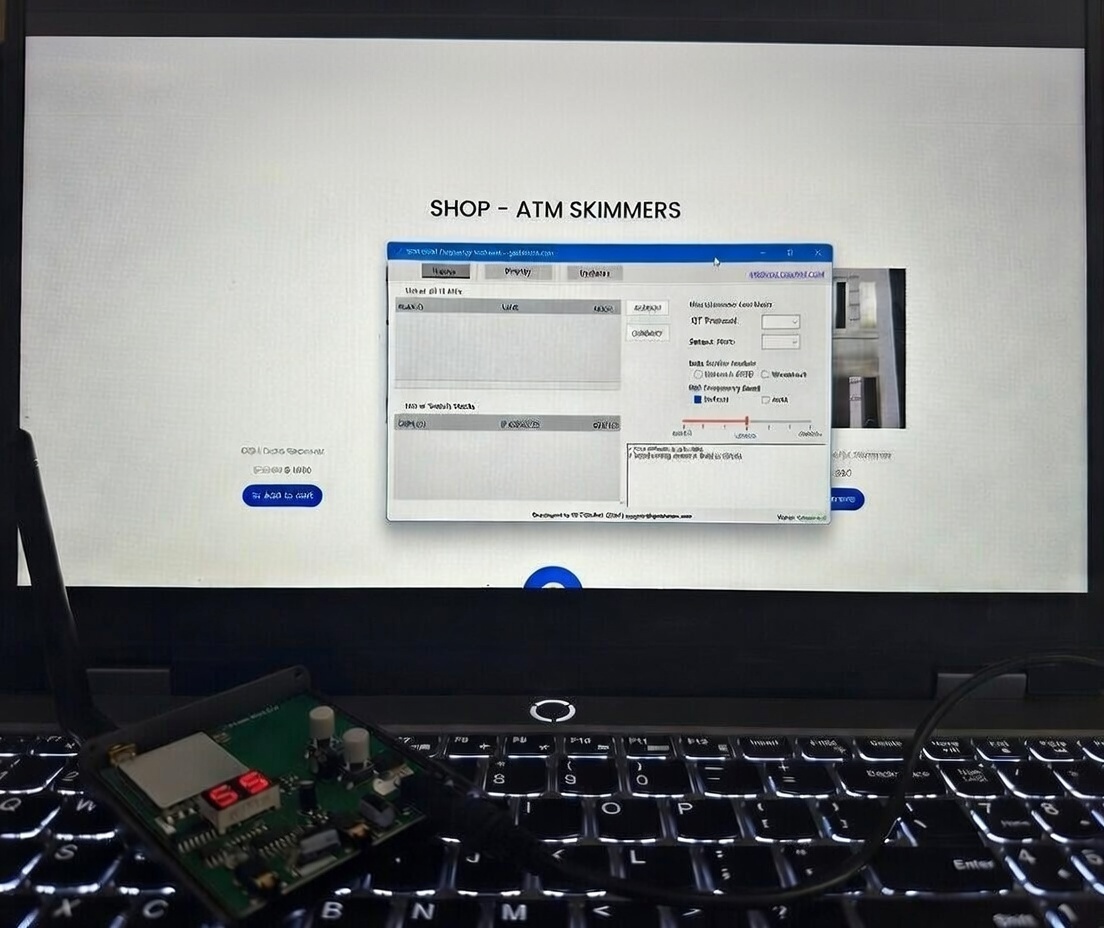
What Defines the “Best” ATM Skimmer for Criminals?
Criminals prioritize skimmers that balance high yield with minimal risk. Key factors include:
- Stealth and Installation Ease — Devices must blend seamlessly, install in seconds, and resist visual/tactile detection.
- Data Capture Quality — Reliable reading of magnetic stripe (Track 1/2), PIN via camera/overlay, and sometimes EMV chip data.
- Transmission Method — Wireless (no return visit needed) via GSM, Bluetooth, infrared, or ZigBee.
- Battery Life and Capacity — Long operation (weeks) and storage for hundreds/thousands of records.
- Cost vs. Reliability — Affordable yet functional; many cheap online “skimmers” are scams delivering junk or malware.
From fraud investigations and expert analyses, deep-insert skimmers combined with wireless transmission consistently rank highest for effectiveness in recent years.
What “Best ATM Skimmer” Should Mean Today
When people search for the best ATM skimmer, they often want to understand how skimming works. However, the safest meaning is the best way to detect, block, and defeat skimmers. ATM skimming is a financial crime that steals card data and PINs. As digital banking grows, criminals attempt to exploit weak machines. Therefore, awareness and strong software tools matter more than ever.
This guide explains how skimmers operate, what detection software does, and which security methods work best. You will also learn how banks, merchants, and consumers stay ahead of fraud.
What Is an ATM Skimmer?
An ATM skimmer is a hidden device designed to capture card information. It reads the magnetic stripe or chip data when a customer inserts a card. Many attacks also include a fake keypad overlay or a tiny camera to record PINs.
Modern skimmers often include wireless modules. These modules send stolen data through GSM or Bluetooth networks. Because of that, criminals no longer need to retrieve devices physically.
Top Types of Advanced ATM Skimmers
1. Deep-Insert or “Crazy-Thin” Skimmers
These ultra-thin circuit boards slide deep into the card acceptance slot, rendering them invisible externally. They capture magnetic stripe data (and sometimes chip info via shimming). Paired with external pinhole cameras or keypad overlays for PINs.
Why “best”? Near-impossible to spot without disassembly; criminals leave them indefinitely, retrieving data wirelessly or via infrared relay to a nearby module.
Recent examples from 2022–2025 show evolution to “crazy-thin” designs fitting snugly inside slots.
A photo of a deep-insert skimmer demonstrates its razor-thin profile:
2. GSM-Enabled Wireless Skimmers
Integrate cellular modems (SIM card) for real-time SMS/GPRS transmission of dumps and PINs. No Bluetooth range limits; data sent globally.
Why preferred? Safest transmission — no proximity needed; fraudsters receive data instantly from anywhere with coverage.
Classic GSM overlay with antenna and SIM slot:
3. Bluetooth Skimmers
Transmit to nearby phone/laptop via Bluetooth (up to ~30 feet). Common in gas pumps/POS but used on ATMs.
Pros: Low power, compact. Cons: Limited range; detectable via Bluetooth scans.
Often hidden inside machines for stealth.
Bluetooth module example from recovered devices:
4. Infrared (IR) Relay Skimmers
Insert skimmer uses IR to beam data to external camera/storage module (no radio signals to detect).
Why advanced? Evades Wi-Fi/Bluetooth sweeps; permanent internal placement possible.
Used in recent U.S. attacks for undetectable long-term operation.
5. All-in-One / Overlay Hybrids
Combine reader, camera, and transmitter in one unit. Reduces components (less risk during install/removal).
Early all-in-ones featured built-in cameras; modern versions add wireless.
PIN pad overlay with integrated GSM:
Software Tools Associated with ATM Skimmers
Hardware alone captures raw data; software processes it for exploitation.
Common illicit tools:
- Dump Parsers/Organizers — Extract Track 1/2, PINs; format for cloning (e.g., custom Windows apps showing incoming SMS dumps).
- Cloning Software — Encode data onto blank cards using writers (e.g., MSR series encoders).
- Transmission Configurators — Set GSM/Bluetooth parameters, encryption, recipient numbers.
- Decryption Services — For audio skimmers (MP3-based), paid decryption turns recordings into usable PINs.
- Firmware/Emulators — Mimic legitimate readers for testing or advanced shimming.
These are sold bundled or separately on underground markets. Many “best” skimmers include proprietary apps for real-time monitoring. However, most online “skimmer software” packages are fraudulent, delivering malware or non-working code.
Why ATM Skimming Is Still a Major Threat
Skimming remains profitable because millions of ATMs and POS terminals exist. Some machines still rely on older technology. Criminals look for weak spots in busy locations.
Meanwhile, stolen card data can be sold or used quickly. That speed makes recovery difficult. Therefore, strong detection and monitoring software becomes essential.
Trends in 2025–2026
Skimming persists despite countermeasures. Jackpotting (malware forcing cash dispense) rose, but skimming/shimming remains top for data theft.
- Deep-insert + wireless (GSM/IR) dominate for stealth.
- Shimmers target EMV chips.
- EBT card skimming increased.
- Secret Service 2025 ops: 411 devices removed, $428M+ prevented.
Criminals adapt to anti-skimming kits (e.g., NCR smart detect with cameras).
Hidden camera for PIN capture, often paired with inserts:
Detection Challenges and Signs
GSM skimmers use mobile networks to send stolen data. That activity creates a radio footprint. Telecom companies and banks monitor these frequencies.
When unusual GSM traffic appears near an ATM, investigators are notified. They can locate and remove the hidden device. This collaboration has already stopped thousands of skimming attempts worldwide.
Advanced skimmers resist casual checks:
- Tug card reader/keypad — legitimate parts secure.
- Look for bulk, misalignment, scratches, glue.
- Shield PIN entry.
- Prefer indoor bank ATMs.
Tools like Skim Scan detect internal readers via LED alert.
Common tampering visual guide:

Why Software Matters More Than Physical Inspections
Visual checks help, but criminals make skimmers look natural. Software never gets tired. It watches machines every second.
Advanced monitoring platforms connect to ATMs over secure networks. They check firmware integrity and hardware status. If anything changes, the system sends an alert.
Because of automation, fraud teams react faster than criminals expect.
How Consumers Can Identify a Possible Skimmer
Even with strong software, human awareness helps. You can spot many threats with simple habits.
Look for loose card slots.
Check for unusual overlays on keypads.
Cover your hand when entering your PIN.
Avoid ATMs that look damaged or poorly lit.
Use banking alerts for every transaction.
If something feels wrong, do not use the machine.
How Merchants Protect POS Terminals
POS terminals face similar risks. Retailers use encrypted readers and tamper-resistant cases. They also deploy endpoint security software that checks for unauthorized changes.
Many systems now use tokenization. That means real card numbers never travel through the terminal. Even if data is intercepted, it remains useless.
Legal, Ethical, and Broader Impacts
Skimming violates federal laws; even possession risks charges. Ethically, it victimizes individuals (elderly, low-income hardest hit), inflates banking costs, and funds organized crime.
Protection: Step-by-Step Guidance
- Choose Safe Locations — Bank-branch ATMs only.
- Use Modern Methods — Contactless (Apple Pay/Google Wallet) or chip insertion.
- Inspect Thoroughly — Tug parts; cover keypad.
- Monitor Accounts — Enable alerts; review statements.
- Report Suspicious — Notify bank/police immediately.
- Business/ATM Owners — Regular inspections, anti-skim kits, firmware updates.
For high-risk areas, use credit (better fraud recourse) over debit.
How Banks Recover From Skimming Attacks
When an attack occurs, banks follow a strict process:
They shut down the affected ATM.
They notify customers.
They reverse fraudulent charges.
They analyze data to prevent future attacks.
Insurance and compliance teams also step in. Their goal is to protect both the customer and the financial system.
The Future of ATM Security
The future looks safer. Many ATMs now use chip-only cards and contactless payments. Biometrics are also being tested. Fingerprints and facial recognition eliminate the need for PINs.
Meanwhile, machine learning continues to improve detection. As algorithms get smarter, skimmers become easier to catch.
Conclusion
The “best ATM skimmer” evolves toward invisibility and wireless efficiency deep-inserts with GSM/IR transmission lead in 2025–2026 due to low detection risk and high yield. Awareness of these threats, combined with vigilant habits and secure payment alternatives, significantly reduces vulnerability. Financial institutions and law enforcement continue aggressive countermeasures, but personal caution remains essential.
Inspect before use, prioritize tokenized/contactless options, and report anomalies promptly. Collective vigilance weakens these criminal tools.
Did you make it this fatr to this post, welldone, you have done well for your sellf.

Best ATM skimmer and how to choose right one?
When choosing an ATM skimmer, there are several factors to consider:
- Compatibility: Ensure that the skimmer you choose is compatible with the ATMs you are working with. Some skimmers are designed to work with specific types of ATMs, so it is important to check the compatibility before purchasing.
- Features: Different ATM skimmers offer different features. Consider the features that are important to you, such as hardware, software and data retrieval.
- Ease of use: Choose a ATM skimmer tool that is user-friendly and easy to operate. It should come with clear instructions, and you should be able to use it without any technical expertise.
- Support: We provide adequate support and assistance if you encounter any issues while using the skimming tool. It is important to have reliable customer support and a warranty or guarantee provided with the skimmer.
Most popular ATM skimmer in the market is the GSM Data Receiver. It is a wireless device that can retrieve data from ATMs by distance. With the GSM Data Receiver, you do not need to install any hardware on the ATM like with classical ATM skimmer and PIN PAD or camera panel. It can retrieve all necessary like chip info and PIN pad data by being close to the ATM in distance up to 150 meters ( distance depending on the model of the GSM Data Receiver).
It is important to note that although the GSM Data Receiver is a most powerful tool in market, it may be suitable for everyone’s needs. It is essential to consider all the factors mentioned above before making a decision. We don`t recommend old type classical skimmers.
In conclusion, when choosing an ATM diagnostic tool, it is important to consider compatibility, features, ease of use, and support. Although the GSM Data Receiver is best tool. If you would like to place order go trough checkout process or contact us directly. Here you will find our product link: GSM data Receiver for sale